
Overview
 PRINT THIS PAGE
Curriculum areas
The 8 learning areas (and their disciplines) and 4 capabilities are known as the curriculum areas. The Arts, English, Humanities and Technologies include distinct disciplines. The Languages learning area includes multiple language curriculums.
Image
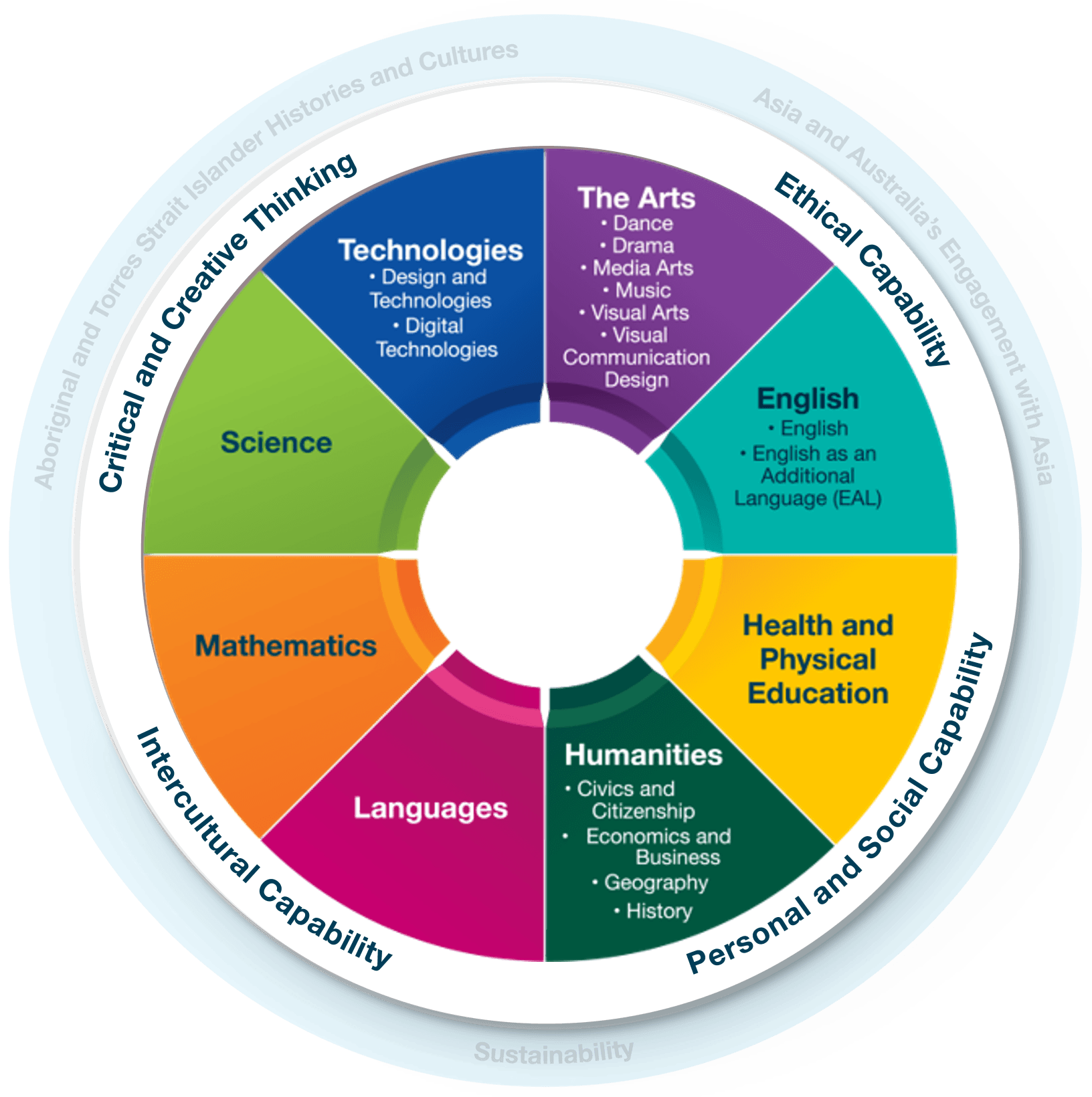
Image Sub Title
The curriculum areas
Image description
Structure of the curriculum areas
Each curriculum area includes an introduction and curriculum content.
The introduction includes information about the rationale, aims and structure of the curriculum, as well as broad information about learning in that curriculum area.
The curriculum content contains the following structural elements:
- Achievement standards – Statements that describe what students are typically able to understand and do at the completion of a curriculum level or band. They are the basis for assessing and reporting student achievement.
- Content descriptions – Specific and discrete information that identifies the content teachers are expected to teach and students are expected to learn. The content descriptions are organised by concepts, skills or ideas into strands and sometimes sub-strands.
- Elaborations – Non-mandated, advisory examples that demonstrate how the curriculum may be transformed into a learning activity or opportunity.
- Levels and bands – Sequenced levels of learning organised as a continuum of learning. Level and band descriptions provide an overview of the achievement standard and content descriptions within a level or band.
► Read more about the structural elements below. See Planning, Reporting and Policies and guidelines for information about implementing the Victorian Curriculum F–10 in schools.